
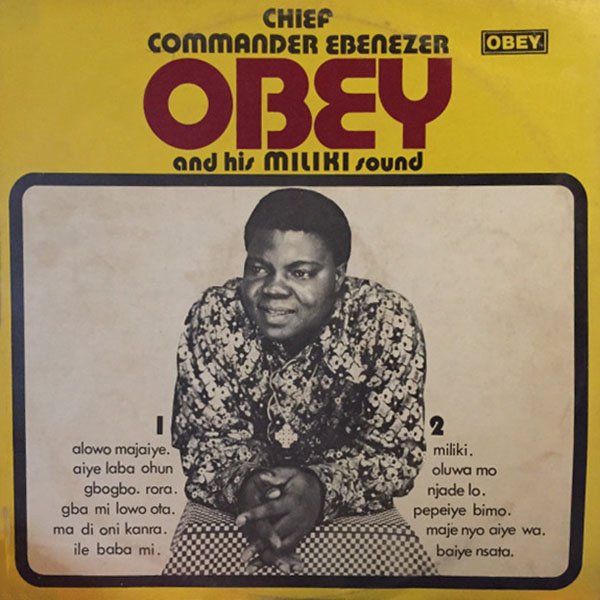

Chief Commander Ebenezer Obey and His Miliki Sound
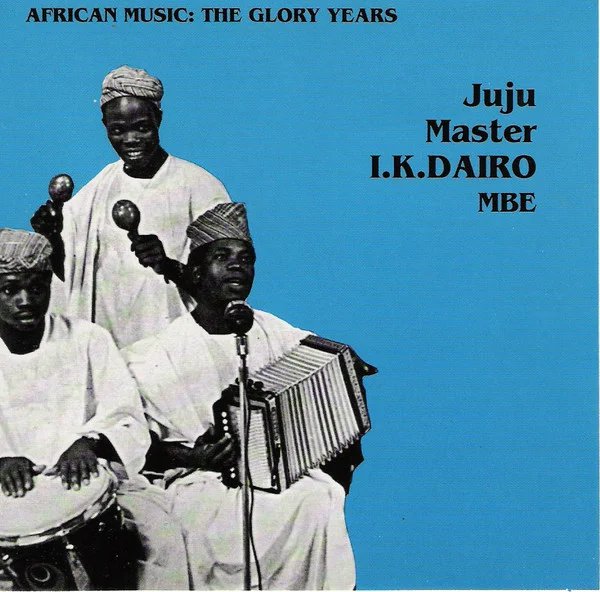
This 1973 album marks a significant moment in Obey’s musical journey, as he transitioned from the highlife-jùjú fusion he’d played throughout the 1960s with his band The International Brothers to the more classic jùjú sound that would make him a superstar. Obey was inspired by pioneers like I.K. Dairo and Tunde Nightingale, which kept the original jùjú-heads happy, but he also strived to appeal to new, younger audiences by experimenting with Yoruba percussion and adding more drums and guitars to weave lively dance compositions. This was before he also added keyboards and synths in the 1980s, but the interplay between the different percussions and guitars — a tenor guitar, a rhythm guitar, and a lead for the solos — is more than enough to create hypnotic, Hawaiian-tinged dancefloor fillers.